
What Causes Excessive Gas? How to Tell if It’s SIBO, Dysbiosis, or Motility Issues
Written by Dr. Bradley DyerThe Gas You Ignore Is Telling You a Story. Here's the Pattern Behind It.
You've been living with gas for so long that you've learned to manage it socially. You know which foods make it worse. You plan your day around when and where you'll be able to excuse yourself. You've tried probiotics, digestive enzymes, avoiding certain foods. Sometimes things improve slightly. Mostly, the gas persists.
Your doctor tells you it's normal. "Everyone has gas." Maybe they suggest Beano or simethicone. Maybe they tell you to avoid cruciferous vegetables or beans. But the recommendations don't match your experience because your gas isn't about broccoli or beans. It happens after seemingly random foods, at unpredictable times, with varying severity.
Here's what nobody's telling you: gas isn't just "normal digestion." The pattern of your gas (when it happens, where you feel it, what it smells like, how painful it is) is diagnostic. It's telling you exactly where in your digestive tract bacteria are overgrowing, which types of bacteria are dominant, and whether your gut motility is functioning properly.
The location tells me if you have small intestinal bacterial overgrowth (SIBO) or large intestinal dysbiosis. The timing tells me how fast or slow your motility is. The smell tells me which bacterial species are producing the gas and what they're fermenting. The pain pattern tells me if gas is getting trapped due to motility dysfunction.
I see patients constantly who've been embarrassed about gas for years, trying to hide it, thinking it means something is wrong with them personally. When I explain that their gas pattern is actually revealing specific, fixable bacterial and motility issues, they're relieved. It's not a character flaw or something they have to live with. It's a solvable diagnostic puzzle.
Let me teach you how to read what your gas is telling you.
Upper Abdominal Gas: The SIBO Signal
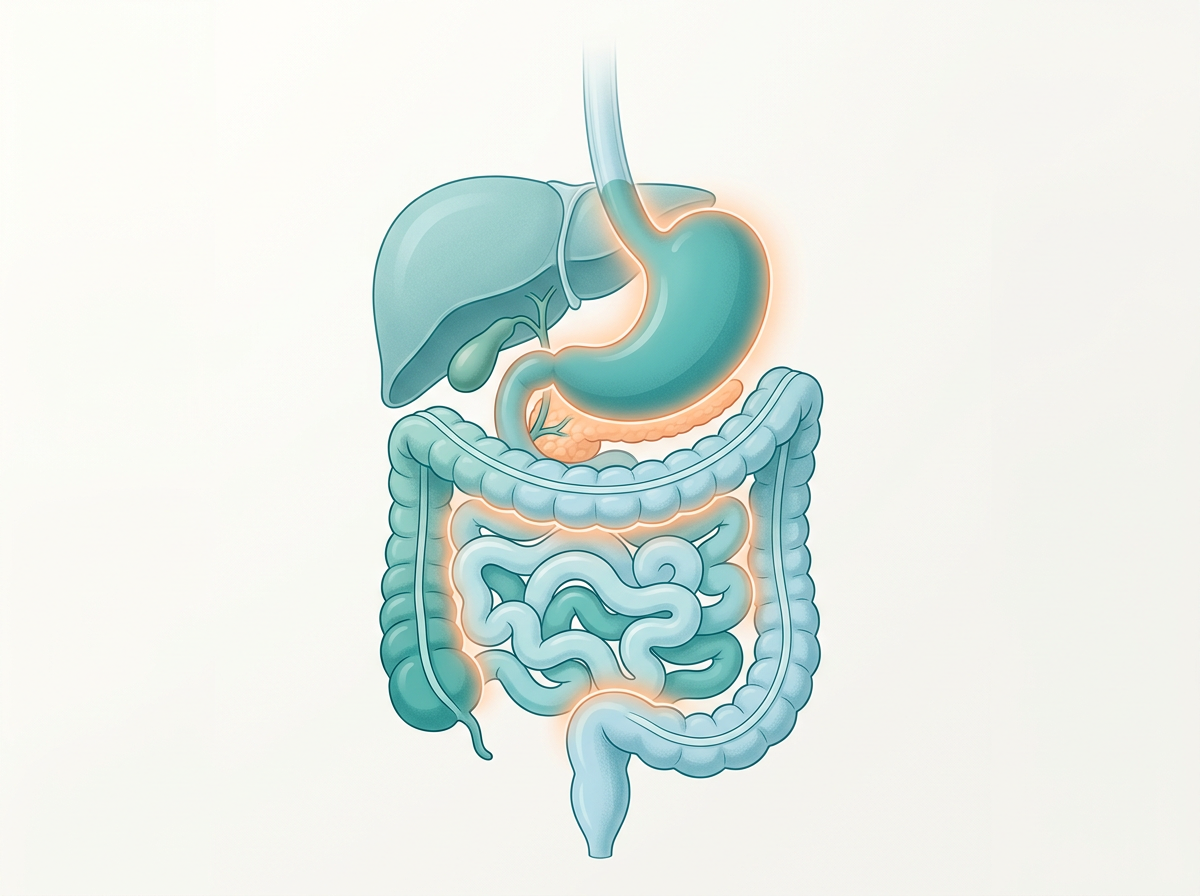
If you feel gas, bloating, or pressure primarily in your upper abdomen (stomach, upper belly, just below your ribs), that gas is being produced in your small intestine, not your colon where it should be.
Your small intestine is supposed to have relatively few bacteria. Most of your gut bacteria should live in your colon. But when bacteria migrate upstream into the small intestine or overgrow there, they ferment the food you eat before it's fully digested and absorbed. This produces gas in the wrong location.
The specific pattern of SIBO-related gas is that it happens relatively quickly after eating, typically within 30 minutes to 3 hours. You eat a meal, and within a couple hours, you feel bloated and gassy in your upper belly. The gas isn't moving down and out easily. It's trapped in the small intestine, creating that distended, uncomfortable feeling.
SIBO gas is often worse with carbohydrates and fiber because these are the primary substrates bacteria ferment. You might notice that a high-fiber "healthy" meal makes you more bloated and gassy than a simpler meal with just protein and fat. This is because the bacteria in your small intestine are fermenting the fiber before your body can absorb it (1).
The other tell for SIBO is that the gas often comes with other upper GI symptoms: nausea, early satiety (feeling full after just a few bites), acid reflux, or burping. These all point to dysfunction in the stomach and small intestine rather than the colon.
SIBO gas also tends to be particularly uncomfortable because the small intestine isn't designed to hold large amounts of gas. It's a relatively narrow tube with less capacity for distension than the colon. When gas accumulates there, it creates sharp pains, cramping, and significant visible bloating (the kind where you look pregnant by evening even though you were flat in the morning).
The key insight: if your gas and bloating are primarily in your upper abdomen and happen within a few hours of eating, suspect SIBO.
Lower Abdominal Gas: Location Tells the Bacterial Story
If your gas is felt primarily in your lower abdomen (below your belly button, in your sides, or in your pelvis), that gas is being produced in your colon. This is actually the normal location for gas production. The question is whether the amount and quality of gas being produced indicates healthy fermentation or problematic dysbiosis.
Normal colonic fermentation produces some gas when beneficial bacteria break down fiber and resistant starches. This gas should be relatively odorless or have a mild smell, and it should pass relatively easily without excessive pain or bloating.
Dysbiosis (bacterial imbalance in the colon) produces excessive gas, often with a more offensive odor, because the bacterial populations are out of balance. Certain bacterial species produce more gas than others, and they produce different types of gas with different smells.
Hydrogen sulfide gas (the rotten egg smell) is produced by sulfate-reducing bacteria and certain proteolytic bacteria that ferment protein and sulfur-containing amino acids. If your gas is particularly foul-smelling, you likely have overgrowth of these bacteria (2).
Methane gas (which doesn't smell as strongly) is produced by methanogens, which are actually archaea, not bacteria. Methane production is associated with slower gut motility and constipation because methane slows down intestinal contractions. If you have constipation along with bloating and gas, methane production might be part of your issue.
The pattern that distinguishes colonic dysbiosis from SIBO is timing. Colonic gas happens later after eating, typically 4 to 8 hours or more, because it takes that long for food to transit from your stomach through your small intestine and reach your colon. If you eat lunch at noon and feel gassy and bloated by dinner time, that's likely colonic fermentation.
Another distinguishing feature is that colonic dysbiosis gas often correlates specifically with fiber-rich foods because those are what feed colonic bacteria. But the reaction isn't immediate like with SIBO. It's delayed.
The Trapped Gas That Creates Stabbing Pain
If you experience sharp, stabbing pains that move around your abdomen, or if you feel intense pressure that's relieved when you finally pass gas, the primary issue isn't the amount of gas being produced. It's that the gas isn't moving through your system efficiently.
This is a motility problem. Your intestines are supposed to have rhythmic contractions (peristalsis) that move contents, including gas, through your digestive tract smoothly. Between meals, there's a specific pattern called the migrating motor complex (MMC) that sweeps through your intestines every 90 to 120 minutes, clearing out residual food particles, bacteria, and gas.
When motility is impaired (from stress, medications, previous infections, nerve damage, or hormonal issues), gas gets trapped in pockets of the intestine. It accumulates until pressure builds up enough to be painful, then suddenly releases, providing temporary relief before building up again (3).
The specific pattern of motility-related gas pain is that it's intermittent and cramping rather than constant. You'll feel fine, then suddenly get hit with a wave of cramping and pressure. You might feel the gas moving through your intestines (you can sometimes track it as it moves from one area to another). When it finally passes, you get immediate relief.
This is different from the constant, heavy bloating of SIBO or the gradual accumulation of colonic fermentation. This is about the mechanics of gas movement being broken.
Often, motility dysfunction coexists with SIBO or dysbiosis. The impaired motility allows bacteria to overgrow in the first place (because the MMC isn't clearing them out properly), and the overgrown bacteria produce excess gas, which then gets trapped because motility is still impaired. It's a compounding problem.
Why Avoiding FODMAPs Helps Some People But Not Others
If you've tried a low-FODMAP diet and it helped significantly, that tells me your gas is likely SIBO-related. FODMAPs (fermentable oligosaccharides, disaccharides, monosaccharides, and polyols) are carbohydrates that are easily fermented by bacteria. Reducing them reduces the substrate available for bacterial fermentation, which reduces gas production.
But here's the catch: a low-FODMAP diet is a diagnostic and temporary intervention, not a solution. If you have to stay on a restrictive diet indefinitely to avoid gas, you haven't fixed the underlying problem. You've just removed the food that reveals the problem.
The people who benefit most from low-FODMAP diets are those with SIBO, because they have bacteria in the small intestine that shouldn't be there. Reducing fermentable carbs reduces the gas those bacteria produce. But this doesn't address why the bacteria overgrew in the first place (usually motility dysfunction or low stomach acid allowing bacteria to migrate upstream).
The people who don't benefit much from low-FODMAP diets are typically those whose gas is primarily from colonic dysbiosis or motility issues. Colonic bacteria are supposed to ferment fiber and resistant starches. That's their job. Removing all fermentable carbs might reduce gas somewhat, but it also starves the beneficial bacteria you want to support. You're treating the symptom while potentially worsening the underlying imbalance.
This is why blanket dietary advice for gas doesn't work. The intervention has to match the location and mechanism of the gas production.
The Smell Is Diagnostic (Even Though No One Wants to Talk About It)
I know this is uncomfortable, but the characteristics of your gas actually tell me which bacterial populations are dominant and what they're fermenting.
Foul-smelling, sulfurous gas (rotten egg smell) indicates hydrogen sulfide production. This comes from sulfate-reducing bacteria or from bacteria fermenting protein and sulfur-containing amino acids. If your gas is particularly offensive and you also experience diarrhea or loose stools, hydrogen sulfide-producing bacteria are likely dominant (4).
These bacteria thrive when there's inadequate stomach acid to digest protein properly (so partially digested protein reaches the colon), when you're eating excessive protein relative to your digestive capacity, or when certain pathogenic bacteria (like certain strains of Desulfovibrio) are present.
Relatively odorless gas that's more about volume than smell often indicates hydrogen-dominant bacteria. These are various species of bacteria that ferment carbohydrates and produce hydrogen as a byproduct. This is more typical of SIBO and is often associated with diarrhea-predominant symptoms.
Minimal smell but significant constipation suggests methane production. Methanogens convert hydrogen into methane, which doesn't have as strong an odor but has the specific effect of slowing gut motility. This creates the constipation-predominant pattern.
The presence of undigested food particles in your stool alongside excessive gas indicates that digestive enzyme function is impaired. Food isn't being broken down properly in the stomach and small intestine, so larger particles reach the colon where bacteria ferment them, producing excess gas.
I'm spelling this out not to be graphic but because these details are clinically relevant. You're not disgusting or abnormal for having these symptoms. You have specific bacterial imbalances or digestive dysfunctions that can be identified and addressed.
Why Generic Probiotics Often Make Gas Worse
If you've tried probiotics and found that they made your gas and bloating worse, not better, that's actually diagnostic information.
Probiotics contain live bacteria. If you have SIBO (bacterial overgrowth in the small intestine), adding more bacteria can worsen the problem. You're adding fuel to the fire. The probiotic bacteria produce gas, the existing overgrown bacteria produce gas, and you feel worse.
This is why I cringe when people are told to "just take probiotics" for gut issues without any assessment of what's actually wrong. If SIBO is present, many probiotics will make symptoms worse, especially soil-based or spore-forming probiotics that can colonize and persist.
The exception is specific probiotic strains that have been shown to reduce gas and bloating, particularly Lactobacillus plantarum and Bifidobacterium infantis. These strains tend to outcompete gas-producing bacteria and can improve symptoms even when SIBO is present (5).
But even beneficial probiotics won't fix the underlying motility dysfunction or low stomach acid that allowed the overgrowth to develop. They might help manage symptoms temporarily, but they're not a root-cause solution.
What Actually Needs to Be Assessed
When someone comes to me with chronic gas that's affecting their quality of life, I need to understand where the gas is being produced, what's producing it, and why it's not being cleared properly.
That means looking at:
SIBO breath testing (glucose and lactulose tests) to determine if bacterial overgrowth is present in the small intestine and whether it's hydrogen-dominant or methane-dominant. The test measures gases exhaled after consuming a sugar solution, which reveals where and what type of bacteria are fermenting.
Comprehensive stool analysis to assess large intestinal bacterial balance, identify pathogenic bacteria or parasites, measure inflammatory markers, and evaluate digestive function (elastase for pancreatic enzyme function, steatocrit for fat digestion).
Organic acids testing to see metabolic byproducts that indicate specific bacterial overgrowths, yeast overgrowth, or nutrient deficiencies affecting digestion. D-lactate elevation, for example, indicates specific bacteria that produce this compound and often correlates with brain fog alongside the gas.
Motility assessment through transit time testing (how long it takes food to move through your system) or, in some cases, gastric emptying studies if upper GI motility is severely impaired.
Stomach acid testing (Heidelberg test or empirical trial of betaine HCl) if there are signs of low stomach acid (feeling full quickly, burping, undigested food in stool, iron deficiency). Low stomach acid allows bacteria to migrate upstream and impairs protein digestion, both of which contribute to gas.
Food sensitivity testing to identify if specific foods are triggering immune reactions that increase gut inflammation and worsen bacterial imbalances.
But beyond testing, I'm listening carefully to the symptom pattern. Where do you feel the gas? When after eating? What foods make it worse? Is it worse at certain times of day? Do you have constipation or diarrhea? The pattern tells me which tests will be most useful and what the likely diagnosis is even before testing confirms it.
How We Actually Fix the Gas Production
Once I understand the mechanism and location of your gas production, the intervention is specific to your pattern.
If SIBO is present, we're treating the bacterial overgrowth with herbal antimicrobials (oregano, berberine, neem, allicin) or antibiotics if needed (rifaximin for hydrogen-dominant, rifaximin plus neomycin for methane-dominant). But treatment alone isn't enough. We have to prevent recurrence by addressing why the overgrowth happened: restoring motility with prokinetics (low-dose naltrexone, ginger, artichoke extract, or prescription options), supporting stomach acid if it's low, and spacing meals appropriately to allow the MMC to function.
If colonic dysbiosis is the issue, we're rebalancing the microbiome by removing pathogenic bacteria, supporting beneficial species with targeted prebiotics and probiotics, and addressing any gut inflammation that's preventing healthy bacterial populations from thriving.
If hydrogen sulfide-producing bacteria are dominant, we're reducing sulfur intake temporarily (limiting high-sulfur foods and supplements), using binders like bismuth that neutralize hydrogen sulfide, and sometimes using specific antimicrobials that target sulfate-reducing bacteria.
If motility dysfunction is trapping gas, we're using prokinetic agents to restore normal intestinal contractions, addressing the vagus nerve function if that's impaired, and using nutrients like magnesium that support smooth muscle function in the intestines.
If low stomach acid is allowing bacteria to migrate upstream or is impairing protein digestion (leading to protein fermentation and sulfurous gas), we're supporting stomach acid with betaine HCl, bitters, or addressing the root cause of low acid production (H. pylori infection, chronic stress, nutrient deficiencies).
The common thread: we're addressing the specific mechanism creating your gas, not just trying to suppress the symptom with simethicone or avoiding entire food groups indefinitely.
What Happens When the Bacterial Balance and Motility Are Restored
When we successfully treat SIBO, rebalance dysbiosis, and restore motility, gas normalizes dramatically.
You can eat normally again without immediate bloating. Meals don't trigger gas production within hours. Your stomach stays relatively flat throughout the day instead of progressively distending.
The painful trapped gas resolves because motility is moving things through efficiently. Gas that is produced passes easily without cramping or accumulation.
Foul-smelling gas improves significantly as sulfur-producing bacteria are reduced and protein digestion normalizes.
You stop planning your day around when and where you can deal with gas. You don't have to avoid social situations or constantly excuse yourself. The gas becomes what it should be: occasional and unremarkable rather than constant and disruptive.
Most people describe getting their life back, feeling comfortable in their body again, not being embarrassed constantly. The relief isn't just physical. It's emotional and social.
Let's Decode What Your Gas Is Telling You
If you're recognizing yourself in these patterns (gas that's affecting your quality of life, bloating that follows specific patterns, pain that nobody's been able to explain), you need to understand what your gas is revealing about your gut function, not just try to suppress it with over-the-counter products.
On a discovery call, here's what we do: I walk through your complete gas and digestive symptom pattern with specific attention to timing, location, quality, and triggers. When does the gas happen? Where do you feel it? What makes it better or worse? Are there other digestive symptoms?
We review any testing you've already had done. Most people have been told everything is "normal" because standard testing doesn't assess for SIBO, dysbiosis, or motility dysfunction.
I explain which specific tests would reveal your gas pattern: whether it's SIBO, colonic dysbiosis, motility dysfunction, or a combination.
And we map out what a protocol would look like to address the specific mechanism creating your gas and restore normal gut function.
These calls are comprehensive, usually 45 to 60 minutes, because gas patterns can be complex and require understanding the full digestive picture.
If you're ready to stop being embarrassed about gas and start understanding what it's telling you about your gut health, you can schedule a discovery call here [LINK]. We'll decode your pattern and figure out how to fix it.
Your gas isn't normal. It's not something you have to live with. It's diagnostic information pointing to specific, treatable imbalances. Let's figure out what your gut is trying to tell you.
References:
Zhong C, Qu C, Wang B, Liang S, Zeng B. Probiotics for preventing and treating small intestinal bacterial overgrowth: a meta-analysis and systematic review of current evidence. J Clin Gastroenterol. 2017;51(4):300-311. doi:10.1097/MCG.0000000000000814
Mego M, Accarino A, Tzortzis G, et al. Colonic gas homeostasis: mechanisms of adaptation following HOST-G904 galactooligosaccharide use in humans. Neurogastroenterol Motil. 2017;29(9):e13080. doi:10.1111/nmo.13080
Pimentel M, Saad RJ, Long MD, Rao SSC. ACG Clinical Guideline: Small intestinal bacterial overgrowth. Am J Gastroenterol. 2020;115(2):165-178. doi:10.14309/ajg.0000000000000501
Carbonero F, Benefiel AC, Gaskins HR. Contributions of the microbial hydrogen economy to colonic homeostasis. Nat Rev Gastroenterol Hepatol. 2012;9(9):504-518. doi:10.1038/nrgastro.2012.85
Dimidi E, Christodoulides S, Scott SM, Whelan K. Mechanisms of action of probiotics and the gastrointestinal microbiota on gut motility and constipation. Adv Nutr. 2017;8(3):484-494. doi:10.3945/an.116.014407