
Nutrition Support for Menopause: Food Strategies for Common Symptoms
Written By Kathryn Davis MS, Nutrition Specialist
Menopause comes for all of us ladies! Not to sound ominous or anything, but about half of the world's population are females and will experience this life stage - so we need to know what to expect and how to support this transition! We like to joke about it and brush it off, but the reality is that approximately 75–85% of women experience bothersome symptoms during menopause, including hot flashes, sleep disturbances, mood changes, and weight gain, so you are not alone!
Thankfully there are choices you can make with your food and habits you can form to level up this life stage. While nutrition won't eliminate symptoms entirely, it can significantly improve your quality of life by supporting hormone metabolism, reducing inflammation, and promoting metabolic health.
What Happens During Menopause?
Menopause is a natural transition, but fluctuating hormone levels can affect nearly every system in your body. During menopause estrogen and progesterone slowly start to decline and many women notice changes in:
Body temperature regulation
Sleep quality
Mood and brain function
Muscle mass and metabolism
Bone health
Gut microbiome
Because hormones influence so many body systems, nutrition becomes one of the most powerful daily tools for supporting your menopausal transition!
Hot Flashes & Night Sweats
Changes in temperature are the most common menopausal symptoms women experience. Estrogen shifts dramatically impact the hypothalamus - the part of the brain that acts as your body's thermostat. Estrogen plays an important role in regulating your core body temperature by helping the hypothalamus maintain a stable temperature zone. As estrogen drops the hypothalamus becomes more sensitive to small shifts. Small increases in your core body temperature that previously went unnoticed are now perceived by the hypothalamus as overheating. Then your brain overreacts to a very normal temperature fluctuation and the hypothalamus quickly activates a heat-loss mechanism, even though you aren't truly overheating. This is when you'll see increased blood flow to the skin, flushing, and intense warmth. Your sweat glands are then activated to help cool you down and regulate temperature.
While nutrition doesn't directly restore these estrogen levels, it can help reduce the frequency or severity of your hot flashes by:
Supporting stable blood sugar, since glucose swings may trigger or worsen vasomotor symptoms in some women.
Reducing systemic inflammation, which may influence hypothalamic function.
Providing phytoestrogens (such as soy foods and flaxseed), which may modestly reduce hot flashes in some women.
Limiting common dietary triggers like alcohol, spicy foods, or excessive caffeine if these consistently provoke symptoms.
Supporting a healthy body weight, as excess adipose tissue is associated with more frequent and severe vasomotor symptoms.
Simple Nutrition strategies:
Eat balanced meals containing protein, fat, and fiber-rich carbs to stabilize blood sugar.
Increase anti-inflammatory omega-3 fats like salmon, flaxseed, and chiaseed.
Choose anti-inflammatory colorful plant foods.
Limit alcohol if it's a trigger.
Reduce excessive caffeine if symptoms worsen.
Foods to emphasize:
Fatty fish
Walnuts
Ground flaxseed
Colorful berries
Leafy greens
Sleep Disruptions
Getting quality sleep is a significant battle during menopause and can truly reduce your energy and mental clarity. Many of us dread the brain fog and fatigue that comes with a poor night's sleep. Declining progesterone and estrogen levels affect your body's stress response, blood sugar regulation, and your brain's ability to transition into deep, restorative sleep.
Progesterone is a precursor to GABA (gamma-aminobutyric acid)—your brain's primary calming neurotransmitter. GABA helps quiet brain activity, reduce anxiety, relax muscles, and prepare your body for sleep. When progesterone drops, GABA signaling becomes less effective and as a result falling asleep becomes harder and your sleep becomes lighter or more easily disrupted. You may notice a "wired but tired" feeling where you are mentally exhausted but can't physically relax enough to sleep.
Cortisol often becomes dysregulated during menopause and doesn't follow its natural rhythm of rising in the morning and gradually declining throughout the day into the evening. Lower estrogen and progesterone levels make your brain's stress response more sensitive. Combined with work stress, caregiving responsibilities, poor sleep, and hot flashes, cortisol may remain elevated later into the evening. Elevated cortisol can make it harder for you to fall asleep and lead to reduced time spent in deep sleep and frequent awakenings.
Significant fluctuations in blood sugar greatly disrupt sleep quality. Many women can become insulin resistant from the drop in estrogen, so blood sugar spikes are more likely to happen after meals during this transitional time. When blood sugar drops too low overnight, your body views this as a potential threat to the brain, which relies heavily on glucose for energy. To raise blood sugar quickly, your body releases cortisol and adrenaline (epinephrine) and can cause you to jolt awake during the night (often between 2-4am).
Simple Nutrition strategies:
Prioritize protein at dinner.
Include magnesium-rich foods like pumpkin seeds, dark leafy greens, and dark chocolate.
Eat enough throughout the day to prevent overnight blood sugar dips.
Avoid large meals and alcohol close to bedtime.
Foods to emphasize:
Pumpkin seeds
Almonds
Lentils
Tart cherries (if appropriate)
Kiwi (supported by some sleep research)
Mood Swings and Brain Health
Mood changes are a challenging part of the menopausal transition, but they aren't "just in your head." They are a very real symptom and signal that your body needs support! As estrogen and progesterone decline, they influence several brain systems involved in your emotional regulation, stress resilience, memory, and cognitive function.
For many women, this can show up as:
Irritability
Anxiety
Mood swings
Increased emotional sensitivity
Difficulty concentrating ("brain fog")
Lower motivation
Feeling less resilient to everyday stress
Estrogen helps support your brain chemistry by acting as a neuromodulator, meaning it helps regulate communication between brain cells. The drop in estrogen impacts neurotransmitters involved in mood and cognition like serotonin, dopamine, and norepinephrine. Serotonin production drops and feelings of well-being begin to decline - you may experience this like a low mood or anxiety or irritability. Reduced dopamine signaling leads to low motivation, difficulty concentrating, and more mental fatigue - no wonder many women complain about brain fog! Norepinephrine activity often increases and heightens your alertness and stress response making you more anxious and sensitive to stress.
Simple Nutrition strategies:
Include protein at every meal. (I can't stress this enough!)
Eat omega-3-rich foods.
Prioritize B vitamins found in nuts, seeds, leafy greens and grass fed animal proteins.
Focus on stable blood sugar - always pair carbs with fat and protein.
Weight Gain and Metabolic Changes
Another frequently reported change during menopause is unintended weight gain no matter what you do. What used to work, doesn't work anymore! As frustrating as it is, weight gain during menopause isn't that you are eating too much, but rather it's influenced by changing hormones, muscle loss, sleep quality, and metabolic adaptations. This is why eating less and moving more is such unhelpful advice. Most women are under-eating and under-fueling for their body's true energy needs. During menopause your muscle mass naturally starts to decline and metabolic rate begins to decrease. Estrogen loss can also promote abdominal fat accumulation causing the unloved weight gain.
Simple Nutrition strategies:
Increase protein intake. Most women are under consuming protein which is the first nutrient to prioritize to maintain muscle mass.
Include resistance training. Picking up heavy objects and using your muscles prevents significant decline in muscle mass.
Eat fiber-rich foods to regulate the gut microbiome and support detox pathways.
Limit ultra-processed foods to reduce inflammation.
Build all your meals around protein, healthy fats, and fiber.
Can phytoestrogens help?
This is a common question many women wonder. Research shows they may help declining estrogen levels. Phytoestrogens are plant compounds that can weakly bind to estrogen receptors and act like estrogens in your body. Phyto = plant, estrogens = estrogen binders. They are much less potent than the body's own estrogen, but may provide mild support for some women as natural estrogen production declines! To be clear, whole-food organic sources are safest, we're not talking about refined soybean oil.
Food sources:
Whole food soy (tofu, tempeh, edamame, natto, miso)
Ground flaxseed
Sesame seeds
Chickpeas
Lentils
Minerals and Hormones
There are a handful of key minerals that ease the menopause transition. Below are key minerals and food sources to consume daily.
Magnesium:
supports muscle relaxation, sleep, mood, and bone health.
Magnesium rich foods: pumpkin seeds, spinach, swiss chard, sunflower seeds, cashews and raw cacao.
Calcium:
helps preserve bone, supports muscle contraction and plays a part of nerve function.
Calcium rich foods: dairy products like full fat grass-fed yogurt and cheese, sardines, salmon, and kale.
Potassium:
supports healthy blood pressure (hello hot flashes), fluid balance and muscle function.
Potassium rich foods: potatoes with skin, prunes, carrots, tomatoes, beet greens, white beans, and sweet potato.
Practical Meal Recommendations
Whole-foods is where it's at! Meals that prioritize protein and are balanced with high-fiber carbs and healthy omega-3 rich fats are going to reduce inflammation, support stable blood sugar and keep cellular function optimal during menopausal changes.
Every meal should include:
Lean protein
High-fiber carbohydrate
Healthy fat
Colorful vegetables or fruit
Example plate:
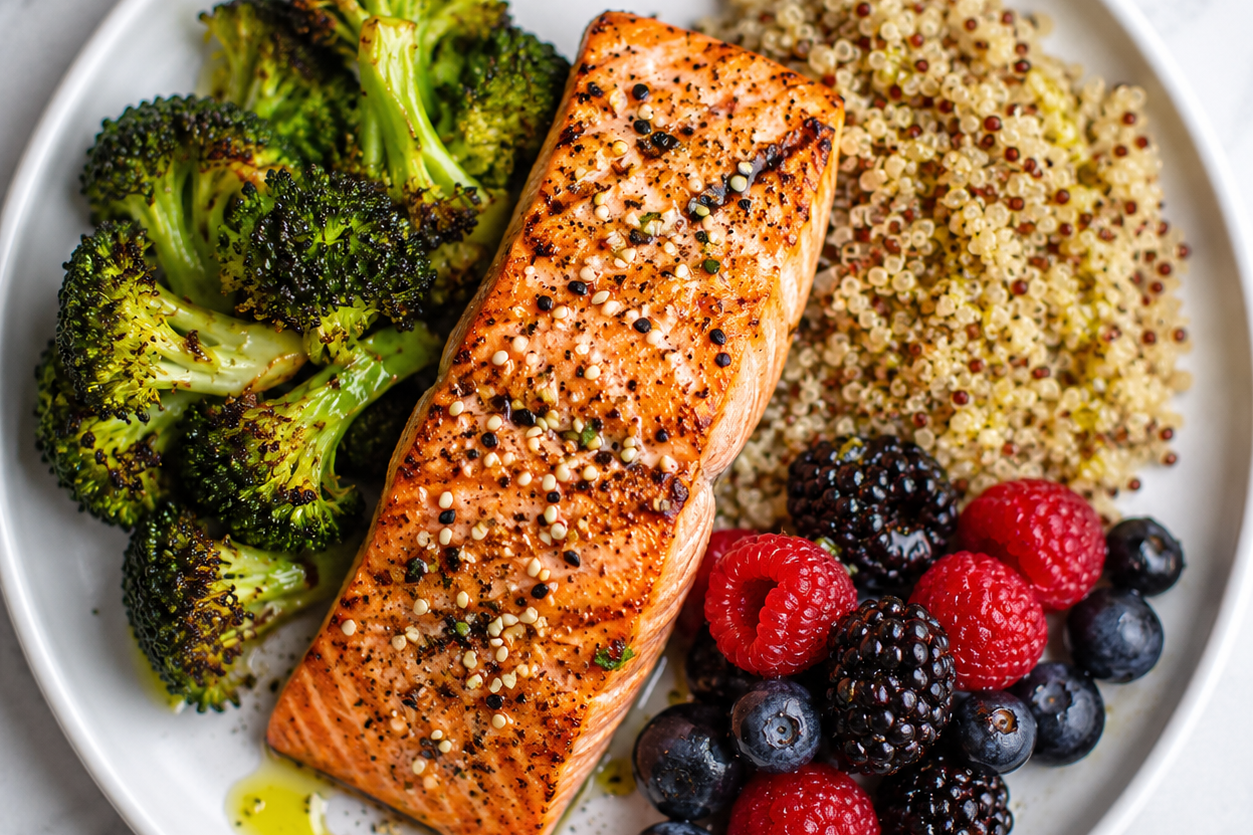
Grilled salmon w/sesame seeds
Roasted broccoli
Quinoa
Olive oil drizzle
Mixed berries
Menopause affects so many aspects of your health like your metabolism, sleep, mood, and body composition. Prioritizing adequate nutrition and building healthful habits will support this transition at a foundational level:
Stable blood sugar supports hormone balance.
Protein and resistance training help preserve muscle.
Anti-inflammatory foods may reduce symptom burden.
Hydration and minerals support energy, sleep, and overall well-being.
Every woman's menopause journey is different. If you're looking for personalized nutrition strategies to support your hormones, metabolism, and overall well-being, our team at PIH is here to help!